

Fluorite
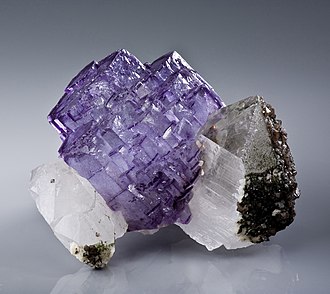
Freestanding purple fluorite cluster between two quartzes
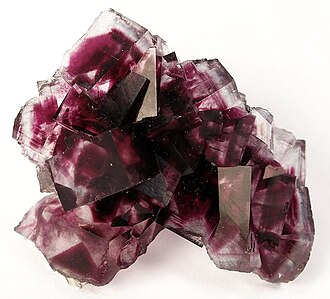
Light to dark burgundy color fluorite
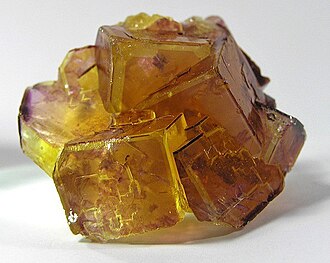
A golden yellow with hints of purple fluorite
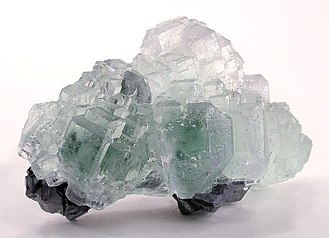
Pastel green fluorite crystal on galena
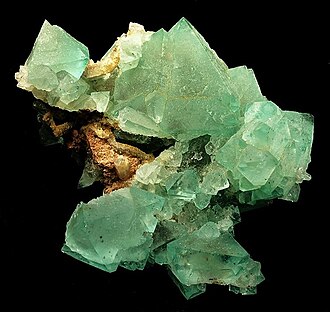
Grass-green fluorite octahedrons clustered on a quartz-rich matrix
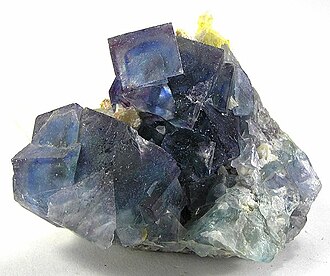
Transparent teal color fluorite with purple highlights
Fluorite, also widely known as fluorspar, is the naturally occurring mineral form of calcium fluoride (CaF₂) and one of the most valuable halide minerals used in modern industry. It typically forms in isometric cubic crystals, but can also appear in beautiful octahedral or more complex geometric structures.
Mineral Characteristics
Chemical formula: CaF₂
Mineral group: Halides
Crystal structure: Isometric (cubic)
Mohs hardness: 4, making fluorite a relatively soft mineral compared with quartz or feldspar
Transparency: Pure fluorite is completely colorless and transparent, showing excellent clarity in both visible and ultraviolet light
Impurities—such as rare earth elements or hydrocarbons—often create vibrant colors, making fluorite one of the most visually diverse minerals. Because of this, it is highly valued in ornamental carving, jewellery, and lapidary work.
Industrial and Commercial Uses of Fluorite
Fluorite plays an essential role in several major industries:
1. Metallurgy
Fluorspar is widely used as a flux in steelmaking and aluminum production, helping to reduce slag viscosity and improve metal purity. This role is so fundamental that the name “fluorite” itself comes from the Latin fluere — “to flow.”
2. Glass and Ceramics
High-grade fluorite is used in:
specialty glasses
enamels
ceramic compounds
It improves melting behaviour, enhances durability, and contributes to a smooth finish.
3. Fluorochemical Production
The purest grades (acid-grade fluorspar, 97%+ CaF₂) are essential for manufacturing hydrofluoric acid (HF) — the foundation for:
refrigerants
fluoropolymers (e.g., Teflon)
lithium-ion battery chemicals
semiconductor cleaning agents
numerous fluorine-containing fine chemicals
4. Optical Applications
Optical-grade fluorite is prized for its low dispersion and high refractive index, making it ideal for:
apochromatic camera lenses
telescopes
microscopes
far-ultraviolet and mid-infrared optical systems
These properties allow lens manufacturers to correct color aberration far more effectively than with traditional glass.
